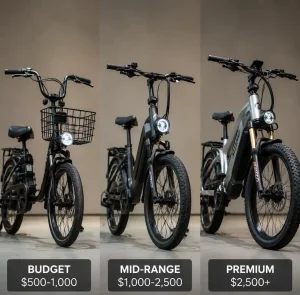







You see electric bicycles everywhere in 2026—commuters gliding past traffic, delivery riders navigating city streets, families exploring parks on weekends. If you’re ready to join them but feel overwhelmed by motor types, battery specs, and frame styles, this guide cuts through the confusion. We’ll show you exactly what matters when choosing your first e-bike and what you can safely ignore.
What Makes Electric Bicycles Different From Regular Bikes
Electric bicycles combine traditional pedaling with battery-powered assistance. A motor mounted in the hub or mid-frame activates when you pedal, multiplying your effort rather than replacing it. This means you still exercise and control the bike normally, but hills flatten out and distances shrink. Most models reach 25-32 km/h with assistance and deliver 50-80 km of range per charge.
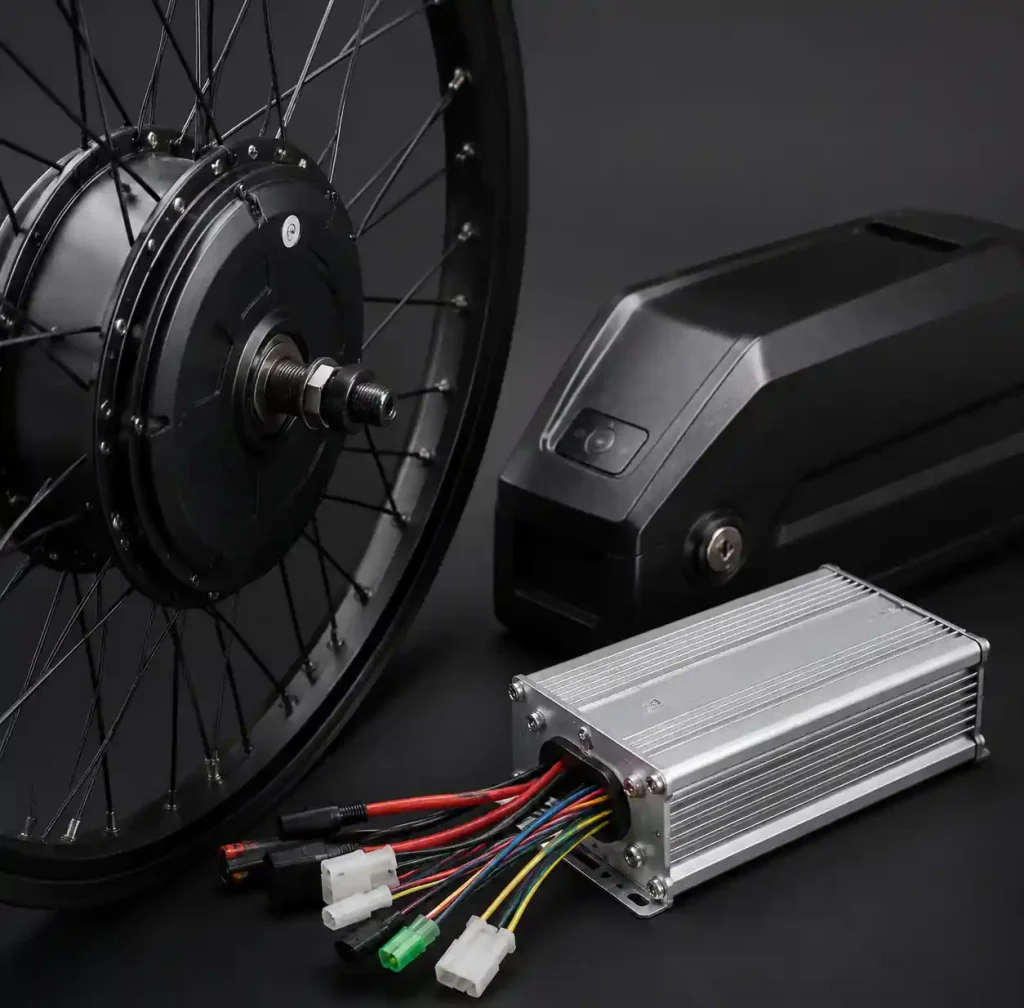
The three core components define every e-bike: the motor provides power, the battery stores energy, and the controller manages how they respond to your pedaling input. Quality in these three areas determines whether your e-bike feels like an enhanced bicycle or a frustrating compromise.
Motor Types: Hub vs Mid-Drive Explained
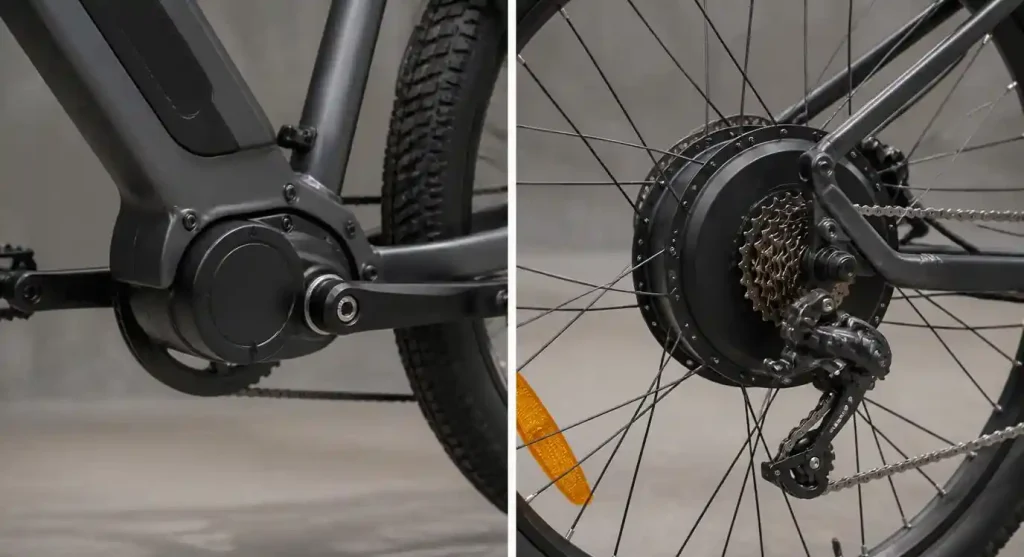
Motor placement affects how your e-bike rides, what it costs, and how much maintenance it needs.
Hub motors sit inside the front or rear wheel hub. They’re simple, affordable, and require minimal maintenance since they operate independently from your bike’s drivetrain. Rear hub motors deliver better traction on hills. You’ll find hub motors on most entry-level e-bikes priced under $1,200. The LC Motor H1 uses a reliable rear hub motor that works well for flat to moderately hilly terrain.
Mid-drive motors mount at the bike’s bottom bracket, powering the chain directly. They deliver superior hill climbing, better weight distribution, and more natural pedaling feel because they work through your gears. Mid-drives cost $300-$800 more than comparable hub motor bikes and require occasional chain maintenance. Choose mid-drive if you face steep hills regularly or ride distances over 30 km daily.
Power ratings run from 250W to 750W. Most cities allow 250W without special licensing. A 250W motor handles flat commutes fine. You need 500W minimum for consistent hill climbing or if you weigh over 90 kg. The 750W models accelerate faster but drain batteries quicker—useful for cargo hauling or very steep terrain, overkill for casual riding.
| Motor Type | Price Range | Best For | Maintenance | Hill Performance |
|---|---|---|---|---|
| Front Hub | $600-$1,000 | Flat terrain, casual riding | Very low | Poor |
| Rear Hub | $800-$1,500 | City commuting, moderate hills | Low | Gut |
| Mid-Drive | $1,500-$3,000 | Steep hills, long distance | Moderate | Excellent |
Battery Capacity: How Far You Actually Need to Ride
Battery capacity determines your range and recharge frequency. Measured in watt-hours (Wh), it’s calculated by multiplying voltage and amp-hours—a 36V 10Ah battery delivers 360Wh.
Real-world range depends on rider weight, terrain, assistance level, and weather. A 360Wh battery typically provides 40-60 km of mixed riding. Add 20-30% capacity if you ride in hilly areas or use high assistance frequently. The LC Motor Metaverse with its 48V 15Ah battery (720Wh) delivers 70-90 km range—enough for most riders to charge just twice weekly.
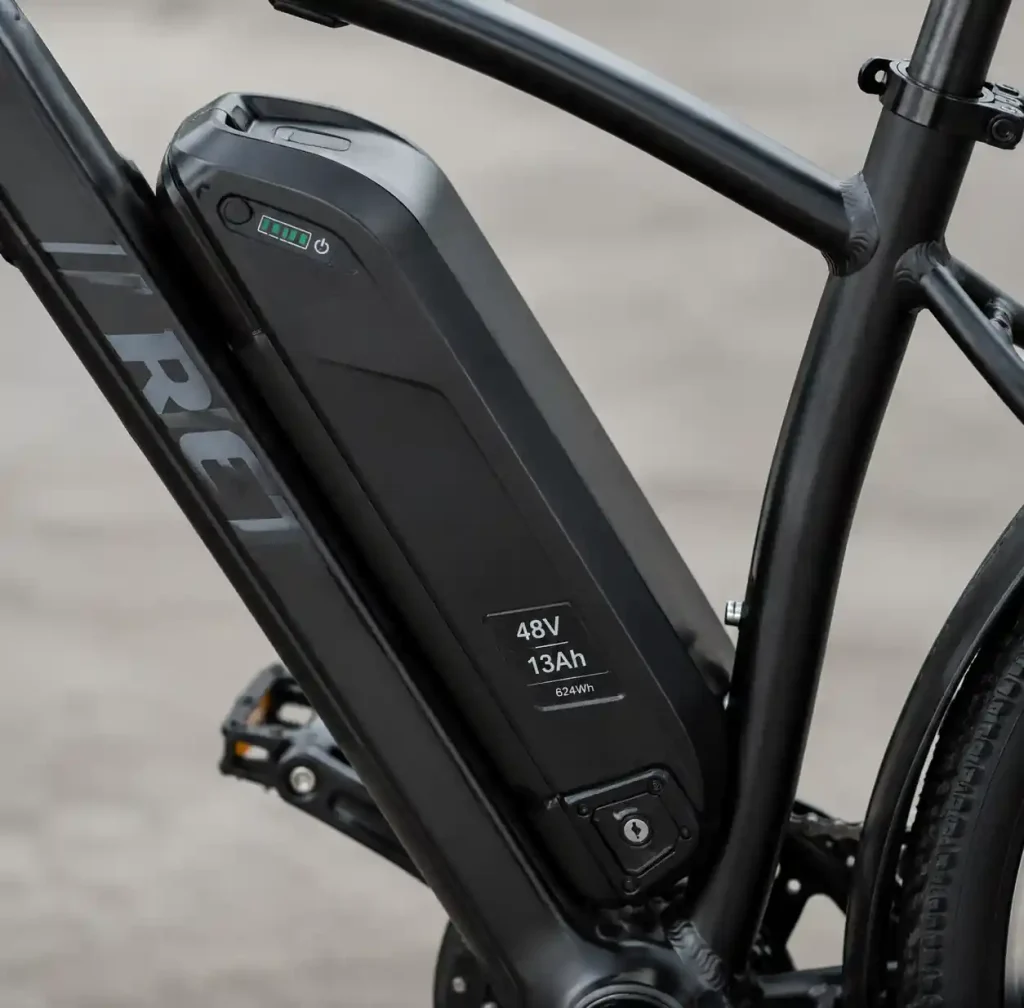
Battery chemistry matters for longevity. Lithium-ion batteries retain 80% capacity after 500-800 charge cycles (roughly 2-4 years of daily use). Avoid older lead-acid batteries—they’re heavier, shorter-lived, and fade quickly. Quality lithium cells from Samsung, LG, or Panasonic justify slightly higher prices through extended lifespan.
Charging practicality affects daily usability. Most batteries fully charge in 4-6 hours. Removable batteries let you charge indoors without bringing the entire bike inside—critical for apartment dwellers. Check if replacement batteries are available and their cost ($300-$600 typically). Some manufacturers lock you into proprietary batteries that become unavailable after 3-4 years.
Frame Styles and Sizing for Comfort
The wrong frame turns every ride into an uncomfortable struggle. E-bikes come heavier than regular bikes (18-28 kg) due to motor and battery weight, making proper fit even more critical.
Step-through frames with low or no top tube let you mount easily while wearing regular clothes. They’re ideal for casual riding, errands, and riders with limited flexibility. Models like the LC Motor Princess prioritize accessibility and comfort over aggressive positioning.
Diamond frames (traditional bike shape with high top tube) offer better structural rigidity for powerful motors and rough terrain. They suit riders who want sportier handling and don’t mind swinging a leg over the frame.
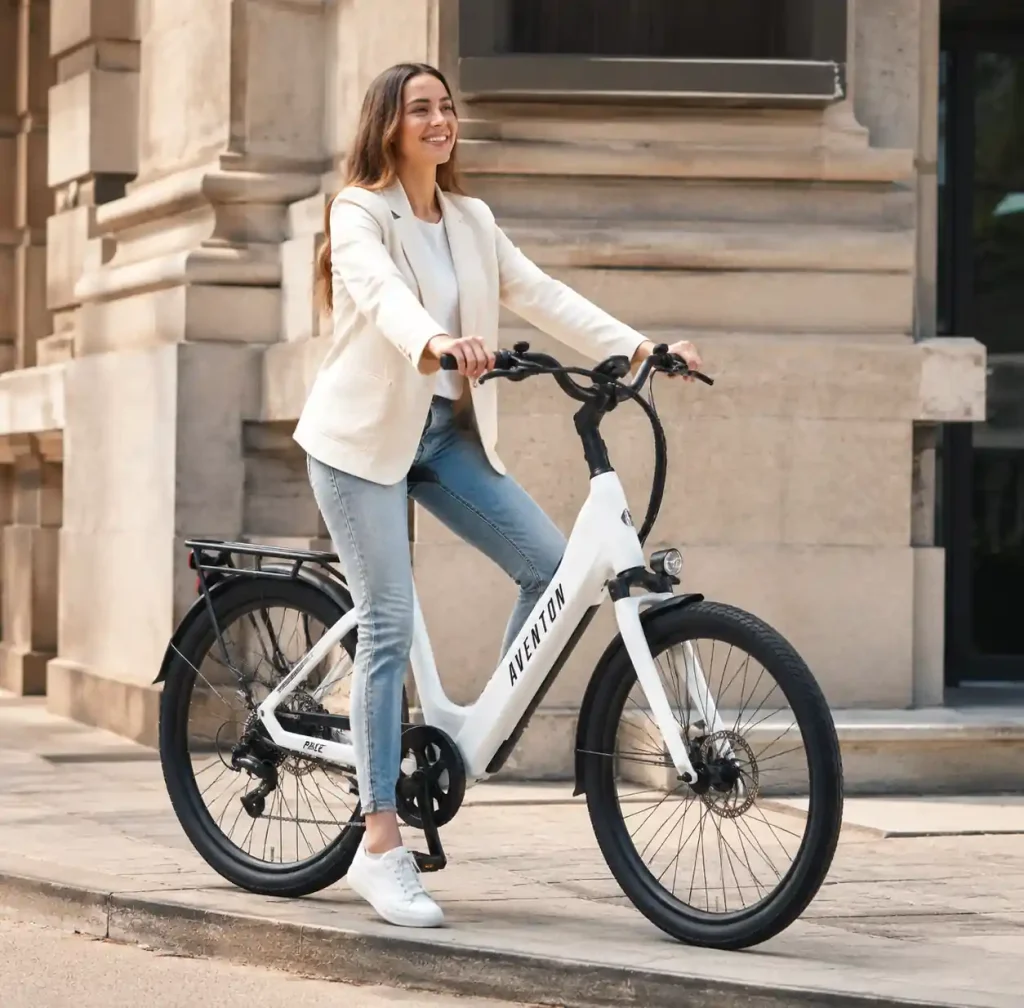
Sizing follows your height and inseam. Manufacturers provide size charts, but test rides reveal fit issues charts miss. When standing over the bike, you should have 2-5 cm clearance between you and the top tube. Seat height should let you extend your leg to 80-90% when the pedal is at bottom position. Handlebars should reach comfortably without hunching or overextending your arms.
Weight capacity ranges from 100-150 kg depending on frame construction. If you’re near the upper limit or plan to carry cargo, add 20% safety margin. Heavier riders need reinforced frames and powerful motors (500W minimum).
Intended Use Cases: Matching E-Bike to Lifestyle
Your daily needs determine which features matter and which are marketing fluff.
City commuting (under 15 km each way): Choose a step-through frame with rear rack, fenders, and integrated lights. A 36V 10Ah battery and 250-350W hub motor handles this easily. The LC Motor H1 delivers exactly this configuration at reasonable cost. Prioritize puncture-resistant tires and chain guards that protect work clothes.
Long-distance commuting (15-30 km each way): You need 500Wh+ battery capacity and mid-drive motors for efficiency. Suspension helps on rougher commutes. Budget for spare battery if charging at work isn’t possible. Models like the Tesla e-bike offer extended range without adding excessive weight.
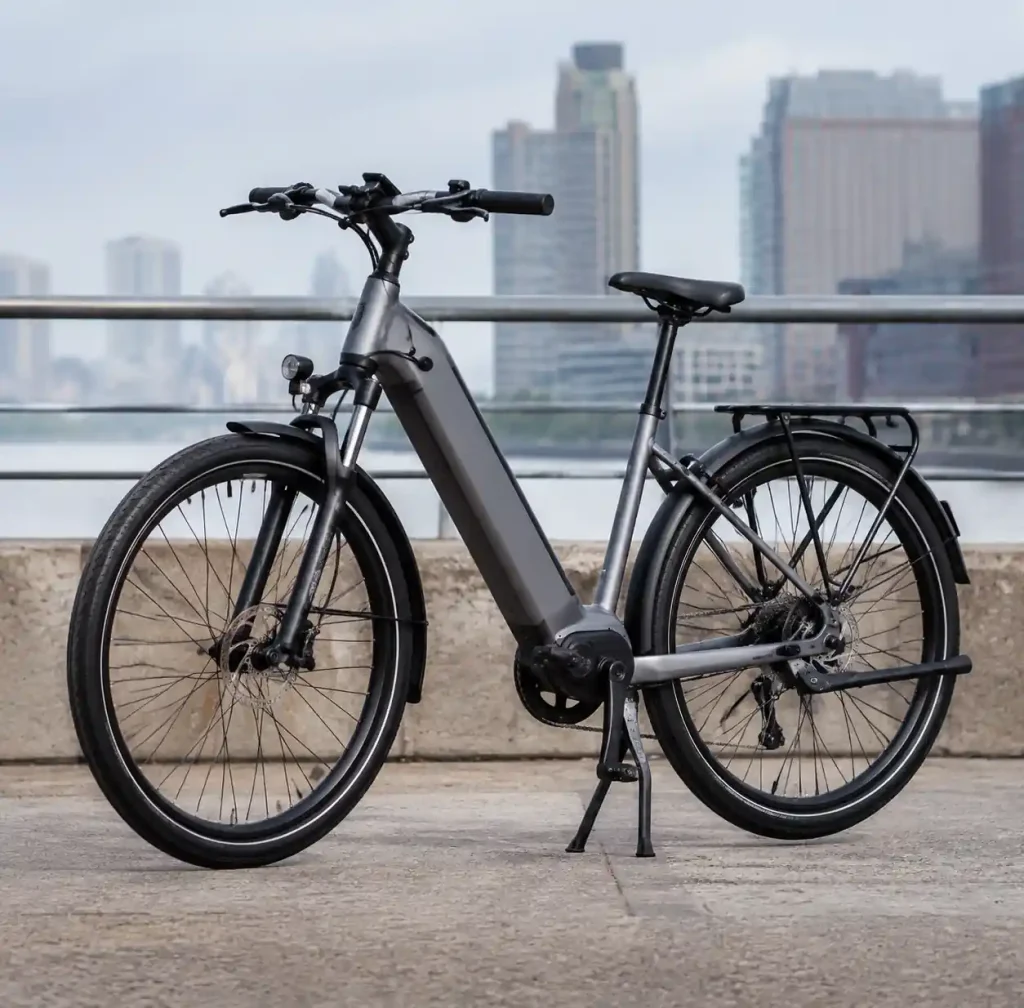
Recreational riding and leisure: Comfort trumps performance specs. Wide saddles, upright riding positions, and adjustable stems let you ride longer without soreness. Battery range matters less when you’re not commuting on schedule. The Ein Urlaub in Rom prioritizes comfort and style over aggressive performance.
Cargo hauling and family use: Look for reinforced frames rated to 150+ kg, powerful motors (750W), and integrated cargo racks or child seat mounts. Longer wheelbases improve stability when loaded. Extended batteries (720Wh+) compensate for extra weight.
Budget Considerations: Where to Invest Your Money
E-bike pricing spans $600 to $4,000. Understanding value helps you spend wisely.
| Price Range | What You Get | Best For | Trade-offs |
|---|---|---|---|
| $600-$1,000 | Hub motor, basic battery (360Wh), steel frame | Flat commutes under 10 km | Limited range, basic components |
| $1,000-$1,800 | Quality hub or entry mid-drive, 480-600Wh battery, aluminum frame | Most urban riders | Good value sweet spot |
| $1,800-$3,000 | Mid-drive motor, 700Wh+ battery, premium components | Daily riders, hilly terrain | Diminishing returns |
| $3,000+ | High-end components, advanced features | Enthusiasts, specialized use | Luxury tier |
The $1,200-$1,800 range delivers best value for beginners. You get reliable motors, adequate range, and quality frames without paying for features you won’t use. LC Motor positions models like the Beta in this sweet spot—proven components at competitive pricing.
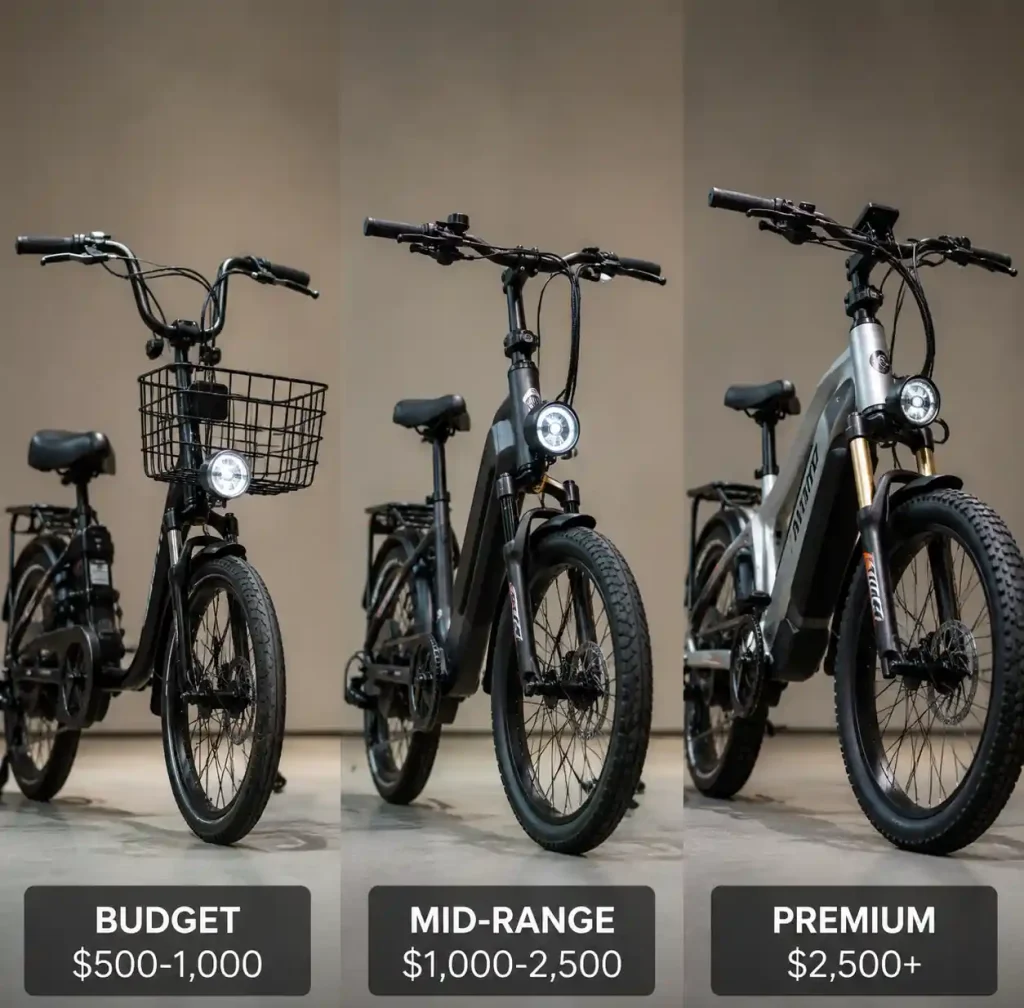
Avoid these budget traps: No-name brand batteries that fail after 6 months. Proprietary components with no replacement availability. Bikes without UL or CE certifications. Suspiciously cheap e-bikes often use outdated technology or cut corners on safety.
Factor in ongoing costs: Electricity costs $0.10-$0.30 per charge (roughly $25-$50 annually). Brake pads wear faster due to extra weight ($40-$80 yearly). Tire replacement every 2,000-4,000 km ($60-$120 per set). Budget $150-$250 annually for maintenance beyond DIY tasks.
Must-Have Features and Nice-to-Have Extras
Some features prove essential through daily use. Others look great in marketing but add little value.
Essential features every beginner needs:
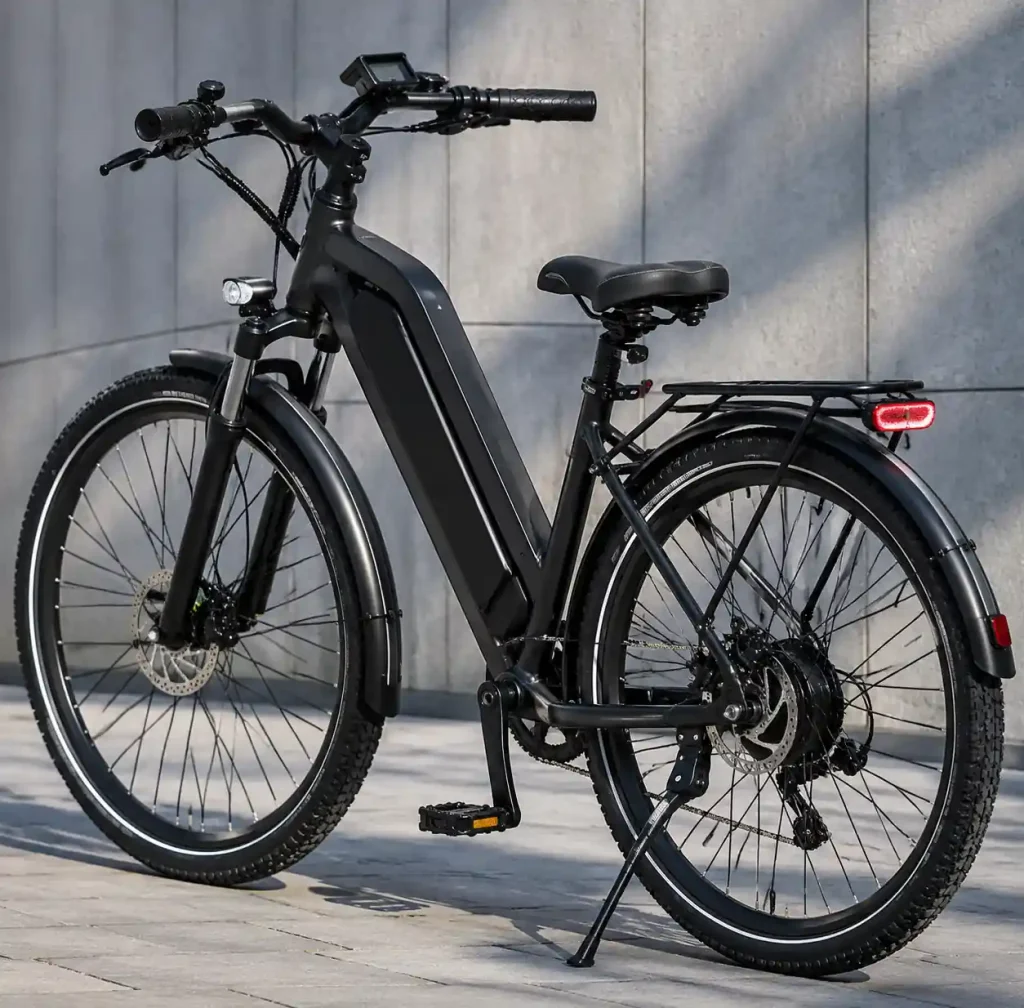
- Integrated lights for visibility and legal compliance
- Fenders to protect from road spray and dirt
- Rear rack for panniers or cargo
- Kickstand sturdy enough for loaded bike
- Anzeige showing battery level, speed, assistance level
- Walk-assist mode for pushing bike up stairs or steep inclines
Valuable upgrades worth considering:
- Hydraulic disc brakes stop better than mechanical in all conditions ($100-$200 upgrade)
- Suspension fork smooths rough roads, essential for longer rides ($150-$300)
- Removable battery for convenient indoor charging
- USB charging port to power phone or lights from main battery
Features you can skip:
- Smartphone app connectivity (rarely used after initial novelty)
- GPS tracking (aftermarket trackers work better)
- Multiple color displays (basic LCD shows everything needed)
- High-end components like carbon fiber (marginal benefit for casual riders)
Common Mistakes Beginners Make
Learning from others’ errors saves money and frustration.
Mistake #1: Buying inadequate battery capacity. You always need more range than calculated. A 360Wh battery that theoretically provides 50 km delivers 35-40 km in real conditions with hills, wind, and full assistance. Add 30-40% buffer to your estimated needs.
Mistake #2: Ignoring bike weight. A 28 kg e-bike with dead battery becomes nearly unrideable. If you need to carry it upstairs, store it on a wall rack, or load it on a vehicle, test the weight before buying.
Mistake #3: Prioritizing motor power over battery range. A powerful motor drains batteries fast. Most riders benefit more from extended range than aggressive acceleration. Balance motor watts with battery capacity.
Mistake #4: Buying without test riding. Fit, comfort, and handling vary dramatically between models. A 30-minute test ride reveals issues that specs hide. Test on hills and at various assistance levels.
Mistake #5: Neglecting theft protection. E-bikes disappear quickly. Budget $80-$150 for quality U-lock plus cable. Consider bikes with integrated locks or removable batteries that disable the motor when removed.
Test Ride Checklist: What to Evaluate
Schedule test rides at multiple shops to compare directly. Bring the backpack or bag you’ll carry daily and wear your normal riding clothes.
Test these specific elements:
- [ ] Can you mount and dismount easily while bike is loaded?
- [ ] Do your feet reach ground comfortably when stopped?
- [ ] Can you lift and maneuver the bike’s weight?
- [ ] Does the motor engage smoothly or lurch when starting?
- [ ] How does it handle at different assistance levels?
- [ ] Can you reach and operate all controls without looking down?
- [ ] Is the riding position comfortable after 15+ minutes?
- [ ] How does it climb hills in your area?
- [ ] Are the brakes responsive and proportional?
- [ ] Does the display provide clear information while riding?
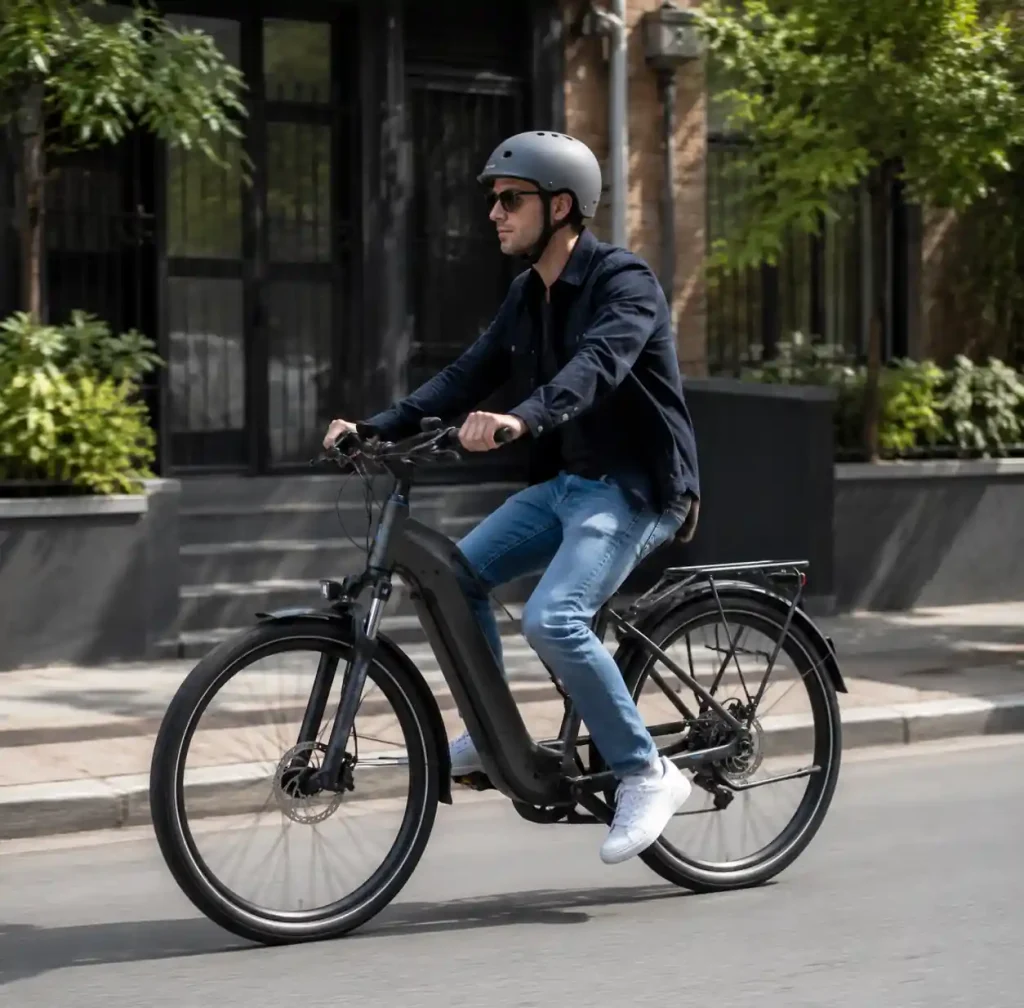
Pay attention to motor noise—quality systems run nearly silent. Excessive whining or grinding indicates poor quality or improper installation. Test both lowest and highest assistance levels since you’ll use both regularly.
Warranty and After-Sales Support Importance
Your e-bike investment depends on reliable support when issues arise.
Minimum acceptable warranty coverage:
- Frame: 2+ years
- Motor: 2+ years
- Battery: 2 years or 500 charge cycles
- Electronics: 1+ year
- Components: 1 year
LC Motor provides 2-year comprehensive warranties on all electric bicycle models, covering both manufacturing defects and component failures. This protects your investment through the critical early ownership period when defects typically surface.
Verify these support elements before purchasing:
- Can you get replacement parts within 2 weeks?
- Is there local service available or must you ship the bike?
- Does warranty cover labor costs or just parts?
- What’s the return/exchange policy if bike doesn’t fit your needs?
- Are replacement batteries available and at what cost?
Established manufacturers maintain parts inventory and service networks. Newer brands may offer lower prices but risk leaving you stranded with unsupported product after 2-3 years.
FAQ
What’s the difference between Class 1, 2, and 3 e-bikes?
Class 1 provides pedal assist only up to 25 km/h. Class 2 adds throttle capability. Class 3 assists to 32 km/h. Most countries restrict where Class 2 and 3 can ride. Choose Class 1 for maximum access to bike paths and trails.
Can I ride an electric bicycle in the rain?
Yes, quality e-bikes have water-resistant electrical systems rated IP54 or higher. Avoid submerging the battery or motor in deep water. Dry and lubricate the chain after wet rides. Store indoors when possible to extend component life.
How long do electric bicycle batteries last?
Lithium-ion batteries retain 80% capacity after 500-800 full charge cycles—typically 2-4 years of daily use. Proper care extends lifespan: avoid full discharge, store at 40-80% charge, keep away from temperature extremes. Replacement costs $300-$600.
Do I need a license or insurance for an e-bike?
Most regions don’t require licenses for Class 1 e-bikes under 25 km/h. Requirements vary by country—check local regulations. Insurance isn’t mandatory but recommended for theft protection and liability coverage.
Can electric bicycles climb steep hills?
Yes, with adequate motor power and proper gearing. A 500W mid-drive motor climbs 15-20% grades comfortably. Hub motors struggle on sustained climbs over 10%. Rider weight and battery charge level affect climbing ability significantly.
What maintenance do e-bikes need?
Similar to regular bikes: brake adjustments, chain lubrication, tire pressure checks, and occasional tune-ups. Additionally, keep electrical connections clean and dry. Battery health checks annually. Expect $150-$250 yearly maintenance costs.
Fazit
Choosing your first electric bicycle comes down to matching motor type, battery capacity, and frame style to your actual riding needs. Most beginners find excellent value in the $1,200-$1,800 range with 500Wh batteries and quality hub or mid-drive motors. Models like the LC Motor H1, Metaverse, and Beta deliver proven reliability without premium pricing.
Start by defining your typical ride distance and terrain, then test ride multiple models in that configuration. Prioritize battery range over motor power—you’ll appreciate extra kilometers far more than aggressive acceleration. Don’t skip essential features like integrated lights, fenders, and quality brakes to save $100-$200, since adding them later costs more.
If you need high-quality electric bicycles for personal use or fleet applications, LC Motor offers a complete range of models designed for urban commuting, recreational riding, and commercial operations. Our e-bikes feature reliable motors, long-range batteries, and competitive pricing backed by comprehensive warranties. Nehmen Sie noch heute Kontakt mit uns auf for product specifications, pricing, and dealer inquiries.