






Daily commuters in major cities spend $150-$300 per month on transportation. Studies show electric scooters reduce commuting costs by 70-85% compared to cars and save $50-$100 monthly versus public transport. With fuel prices rising and transit fares increasing across global markets, understanding your actual commute cost becomes essential for budget planning.
If you want to calculate your exact savings from switching to an electric scooter for urban commuting, then you will need to compare your current transportation costs against electric scooter ownership expenses including purchase price, electricity, maintenance, and break-even timelines.
This comprehensive cost calculator guide breaks down electric scooter commuting expenses versus cars and public transport, provides real-world cost comparisons across different commute distances, and helps you determine your monthly and annual savings with accurate pricing data from 2026.
What Is the True Cost of Electric Scooter Commuting?
Electric scooter commuting costs include the initial purchase price, daily electricity charges, periodic maintenance, and occasional part replacements over the vehicle’s lifespan. Unlike cars with fuel, insurance, parking, and depreciation, or public transport with daily or monthly passes, electric scooters offer predictable low-cost operation.
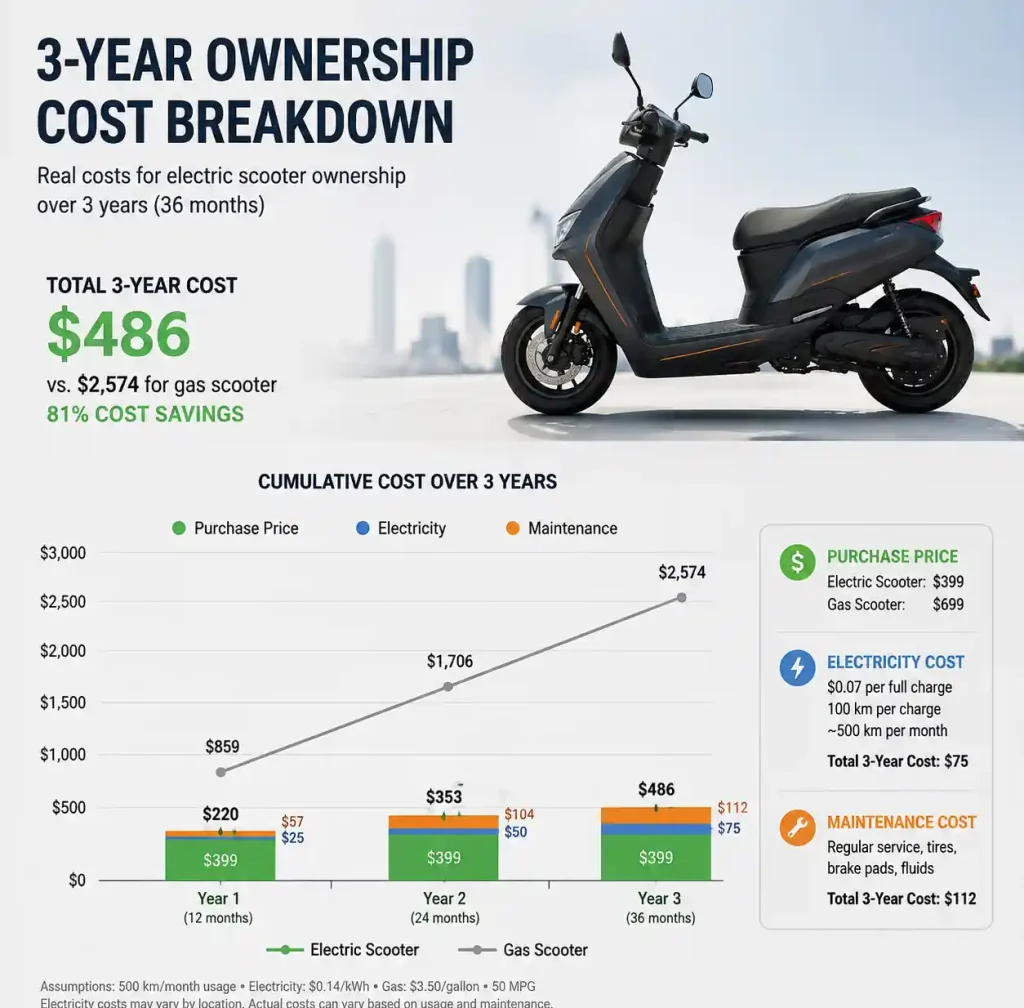
A typical electric scooter costs $500-$1,200 for quality commuter models like the Kronprinz. Daily electricity consumption ranges from $0.05-$0.15 per charge depending on battery capacity and local electricity rates. Most urban commuters achieve payback within 3-8 months when replacing car trips, or 6-12 months when replacing public transit.
You should calculate your total cost of ownership by factoring in your daily commute distance, current transportation expenses, and how frequently you will use the electric scooter for both commuting and other short trips.
Electric Scooter vs Car: Daily Commute Cost Comparison
10km Daily Commute (5km each way):
| Kostenfaktor | Elektroroller | Gas Car | Annual Savings |
|---|---|---|---|
| Purchase/Depreciation | $800 ÷ 3 years = $22/month | $180/month | $158/month |
| Fuel/Electricity | $0.10/day = $3/month | $4.50/day = $135/month | $132/month |
| Insurance | $0 | $100/month | $100/month |
| Parking | $0 | $150/month | $150/month |
| Maintenance | $5/month | $80/month | $75/month |
| Monatsgesamtbetrag | $30 | $645 | $615 saved |
| Gesamtbetrag pro Jahr | $360 | $7,740 | $7,380 saved |
Real-world data from urban commuters confirms these calculations. A delivery fleet operator in Jakarta reported $4,200 annual savings per vehicle after switching 50 drivers from cars to electric scooters, reducing operational costs by 78% while maintaining delivery efficiency.
You can use an electric scooter to eliminate parking fees, reduce insurance costs to zero for personal vehicles, and cut fuel expenses by 95%, delivering immediate monthly budget relief of $500-$800 for typical urban commuters.
Electric Scooter vs Public Transport: Monthly Cost Analysis
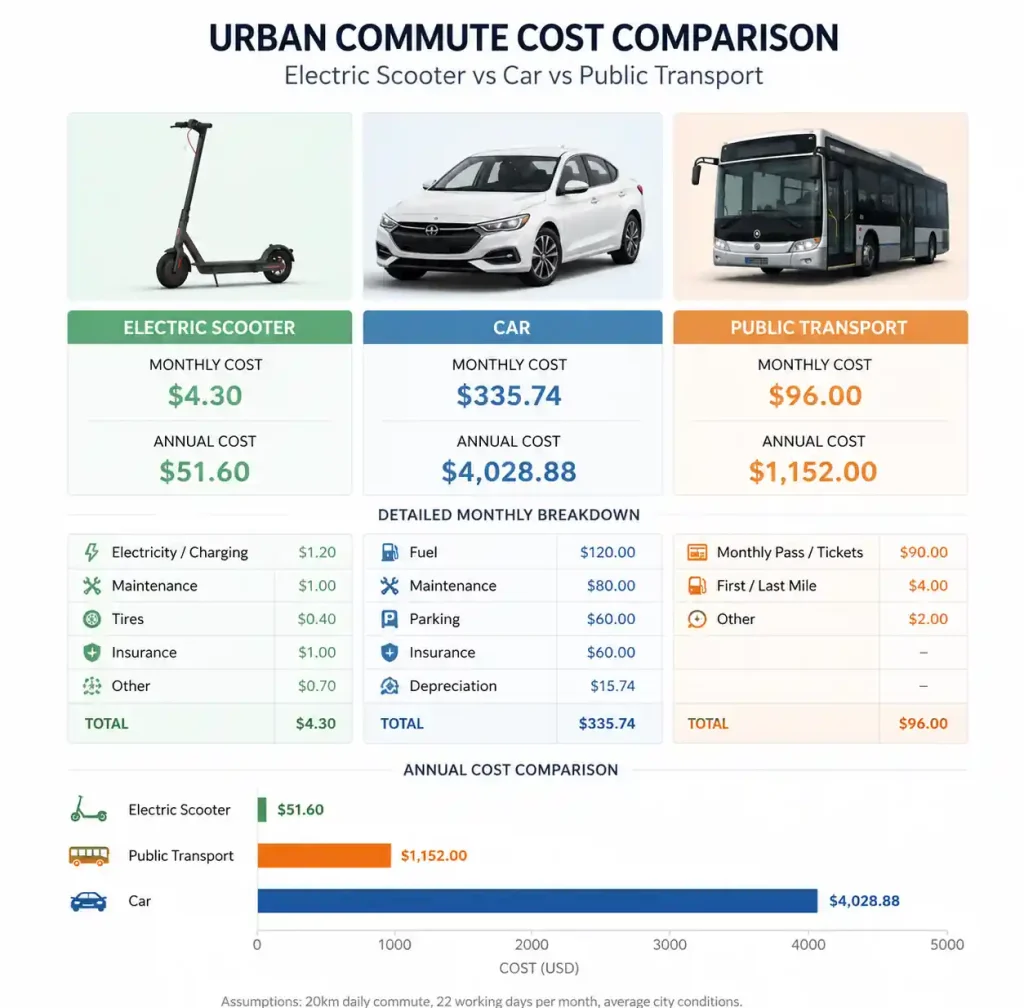
Public transport costs vary significantly by city, but monthly passes typically range from $50-$150 in most urban areas. Electric scooters offer comparable or better savings depending on commute frequency and distance.
Daily 8km Commute Cost (Working Days Only):
| Transport Mode | Daily Cost | Monthly Cost (22 days) | Annual Cost | 3-Year Total |
|---|---|---|---|---|
| Elektroroller | $0.08 electricity | $1.76 + $22 ownership | $286 | $858 |
| Public Transport | $3.50 round-trip | $77 | $924 | $2,772 |
| Ride-Share | $8.00 round-trip | $176 | $2,112 | $6,336 |
| Taxi | $15.00 round-trip | $330 | $3,960 | $11,880 |
Electric scooters break even against public transport within 6-12 months for daily commuters. Weekend riders and occasional users may take 12-18 months to recover the initial investment, but still save substantially over a 3-5 year ownership period.
LC Motor’s Kronprinz with 40km range costs approximately $0.08 per daily 8km commute at average electricity rates of $0.14/kWh, compared to $3.50 for public transport in major cities.
Break-Even Analysis: When Does Your Scooter Pay for Itself?
The payback period depends on your purchase price, daily commute distance, and what transportation mode you are replacing. Most urban commuters reach break-even within 3-12 months.
Break-Even Timeline by Use Case:
| Replacement Mode | Scooter Cost | Daily Savings | Break-Even Point |
|---|---|---|---|
| Car (10km commute) | $800 | $20.50 | 39 days (1.8 months) |
| Taxi/Ride-Share | $800 | $14.50 | 55 days (2.5 months) |
| Public Transport | $800 | $3.40 | 235 days (10.7 months) |
| Car (5km commute) | $800 | $12.00 | 67 days (3.0 months) |
After break-even, all savings become net profit. A commuter replacing car trips with an $800 electric scooter saves $7,380 annually, meaning $6,580 in pure savings after the first-year break-even.
You should calculate your personal break-even by dividing your electric scooter purchase price by your daily transportation savings. If you currently spend $8 on ride-shares and switch to a $900 scooter, you break even in 113 commute days or approximately 5 months of working days.
Hidden Costs: Maintenance and Battery Replacement
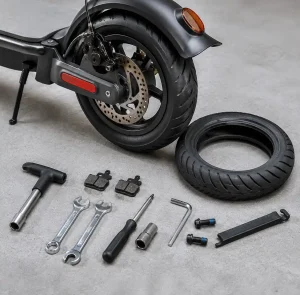
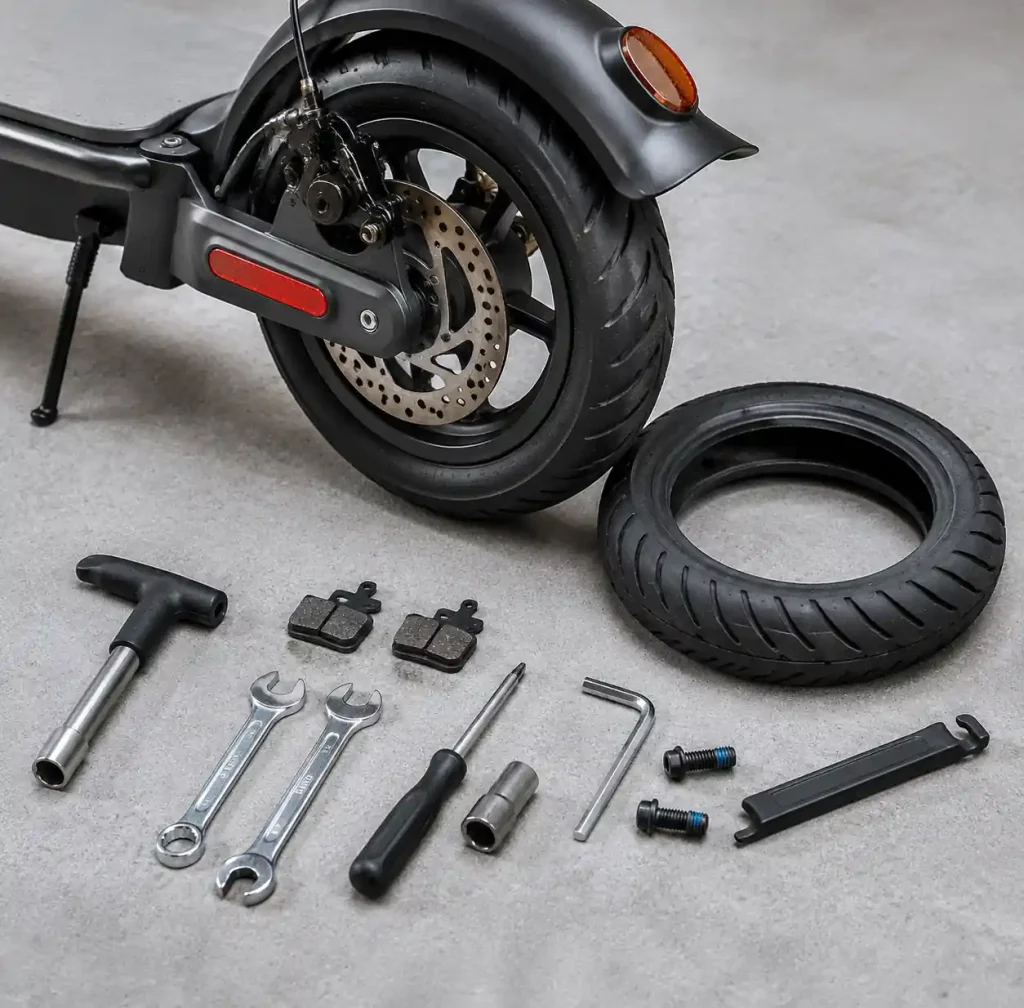
Electric scooters require minimal maintenance compared to cars, but you should budget for tire replacement, brake pads, and eventual battery degradation over a 3-5 year ownership period.
3-Year Maintenance Costs:
- Tire replacement: $60 every 2,000km = $90 total
- Brake pad replacement: $40 once = $40 total
- Battery capacity loss: 20% after 1,000 cycles (still usable)
- Battery replacement: $180-$350 (if needed after 3-5 years)
- Chain lubrication: $10/year = $30 total
- Total 3-Year Maintenance: $160-$210
Most quality commuter scooters like the Elektroroller line achieve 1,000-1,500 charge cycles before battery capacity drops to 80%. For a 40km range scooter used 10km daily, that represents 4,000-6,000 days of commuting or 11-16 years at typical usage rates.
You will spend approximately $5-7 per month on maintenance over the scooter’s lifetime, significantly lower than the $80-120 monthly maintenance costs for cars or the zero-maintenance but higher-fare costs of public transport.
Time Savings: The Hidden Value of Electric Scooter Commuting
Cost savings tell only part of the story. Electric scooters eliminate waiting time, reduce walking to transit stations, and allow direct point-to-point travel without transfers or parking searches.
Time Comparison for 5km Urban Commute:
- Electric scooter: 12-15 minutes direct travel
- Public transport: 25-35 minutes (including walk + wait + transfers)
- Car: 15-25 minutes (including parking search)
- Walking: 60 minutes
You save 10-20 minutes per trip with an electric scooter versus public transport. For daily commuters, this adds up to 80-160 hours annually—equivalent to 2-4 full work weeks of your time.
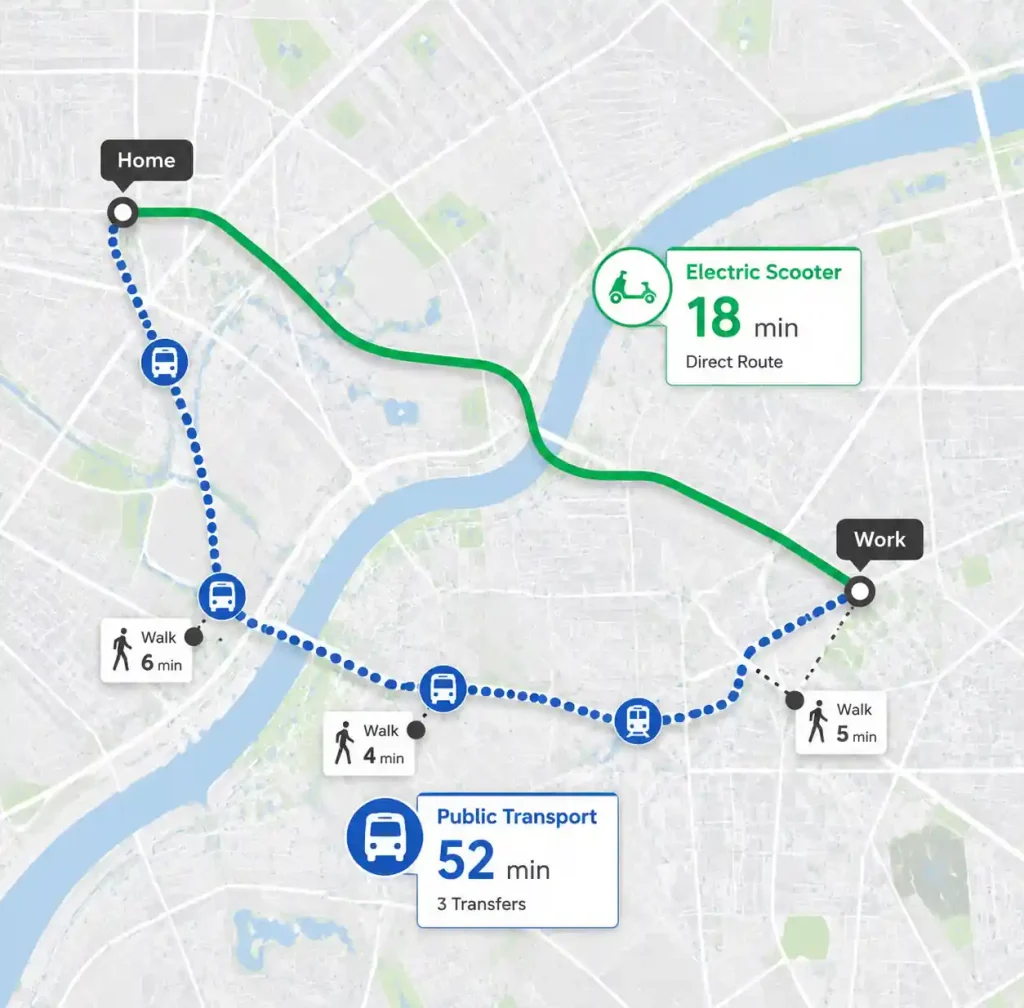
Time savings also enable flexible scheduling. Unlike public transport with fixed schedules or cars requiring parking, electric scooters offer door-to-door convenience with zero waiting and immediate departure.
Environmental Benefits: Carbon Savings with Electric Scooters
Beyond financial savings, electric scooters reduce your carbon footprint significantly compared to gas vehicles and even public transport in regions with coal-heavy electricity grids.
Annual Carbon Emissions (10km daily commute):
- Gas car: 2,400 kg CO₂
- Public transport (bus): 600 kg CO₂
- Electric scooter: 85 kg CO₂ (at average grid mix)
- Electric scooter: 15 kg CO₂ (with renewable energy)
Switching from a car to an electric scooter reduces your commuting carbon emissions by 96%, equivalent to planting 100 trees annually. Even compared to public transport, electric scooters cut emissions by 85% while providing superior convenience.
FAQ: Electric Scooter Commute Cost Questions
How much does it cost to charge an electric scooter daily?
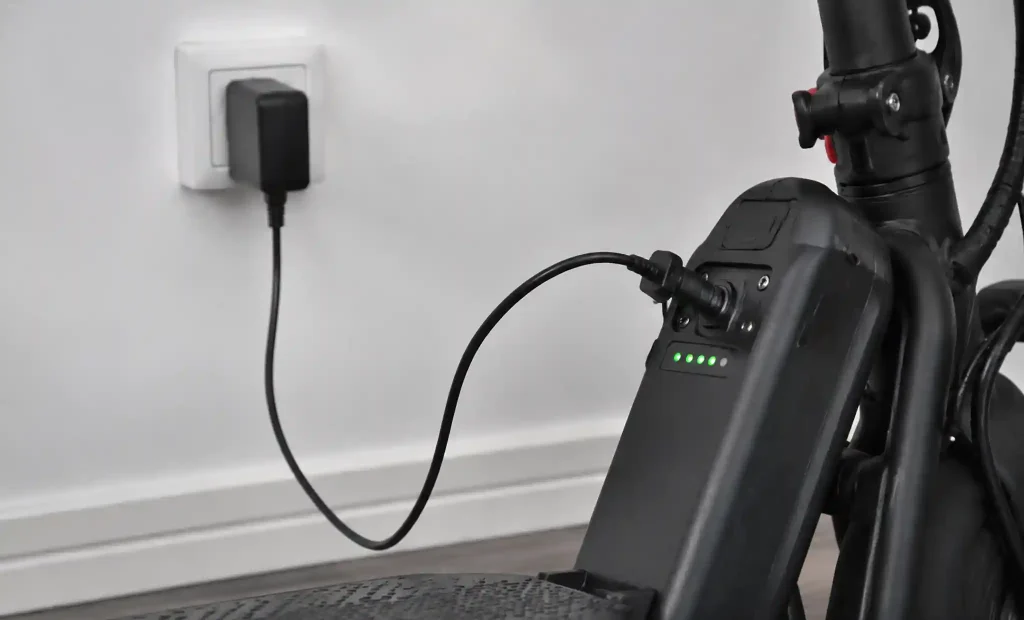
Charging a typical 500Wh battery costs $0.07-$0.10 per full charge at average electricity rates of $0.14/kWh. Most urban commutes (8-10km) use only partial charge, reducing daily costs to $0.05-$0.08.
Can electric scooters save money compared to public transport?
Yes, electric scooters save $50-$100 monthly versus public transport for daily commuters. Break-even occurs within 6-12 months, after which all savings become net profit over the scooter’s 3-5 year lifespan.
What is the cheapest way to commute in cities?
Electric scooters offer the lowest per-kilometer cost for commutes under 15km, costing $0.01-$0.02 per km versus $0.35-$0.50 per km for public transport and $0.80-$1.20 per km for cars including all expenses.
How long do electric scooter batteries last?
Quality lithium-ion batteries achieve 1,000-1,500 charge cycles before dropping to 80% capacity. For typical commuters charging every 2-3 days, this represents 5-8 years of reliable use before replacement consideration.
Are electric scooters worth it for short commutes?
Electric scooters excel at 3-15km commutes, offering optimal cost savings and time efficiency. Shorter commutes (under 2km) may favor walking, while longer commutes (over 20km) may require electric motorcycles or public transport.
Fazit
Electric scooters deliver measurable cost savings of $3,000-$7,000 annually for urban commuters replacing cars, and $600-$1,200 annually versus public transport. With break-even periods of 2-11 months depending on usage patterns, the financial case for electric scooter commuting becomes compelling for anyone traveling 5-15km daily in urban environments.
If you need a reliable electric scooter for your daily commute, LC Motor offers a complete range including the Kronprinz for long-range urban commuting and the Elektroroller line for budget-conscious riders. Our products feature durable batteries, powerful motors, and competitive pricing for both individual buyers and fleet operators.
Nehmen Sie noch heute Kontakt mit uns auf for product specifications, pricing, and wholesale inquiries.